Medications That Can Increase Fall Risk in Older Adults
Some medicines, and combinations of medicines, can cause dizziness, drowsiness, low blood pressure or confusion. All of these raise the risk of falling. The CDC's STEADI program recommends a regular medication review for older adults.
Important: never stop or change a medicine on your own. Some must be reduced slowly. Always talk to the doctor or pharmacist.
Types of medicines often reviewed for fall risk
- Sleep medicines, including some over-the-counter sleep aids
- Benzodiazepines and other anti-anxiety medicines
- Antidepressants and antipsychotics
- Opioid pain medicines
- Some blood pressure medicines, which can cause dizziness on standing
- Medicines that lower blood sugar, if they cause low blood sugar
- Some antihistamines and other medicines with sedating or anticholinergic effects
- Muscle relaxants
The list isn't complete. The risk depends on the dose, the person, and the combination.
Signs to mention to the doctor
- Dizziness when standing up
- Feeling sleepy or foggy during the day
- New unsteadiness after starting a medicine
- Confusion
How to get a medication review
- Put every medicine in a bag: prescriptions, over-the-counter, vitamins and supplements. This is often called a "brown bag" review.
- Bring it to the doctor or a pharmacist.
- Ask: Are any of these raising the risk of falling? Can any be reduced or stopped safely? Are there safer alternatives?
- Write down any changes.
Everyday safety
- ☐ Use one pharmacy so it can check interactions
- ☐ Use a weekly pill organizer
- ☐ Ask for large-print labels
- ☐ Stand up slowly, especially at night
Not medical advice. Talk to a doctor or pharmacist.
The Aging-in-Place Home Safety Checklist includes a medication review page and a medicines tab in the tracker.
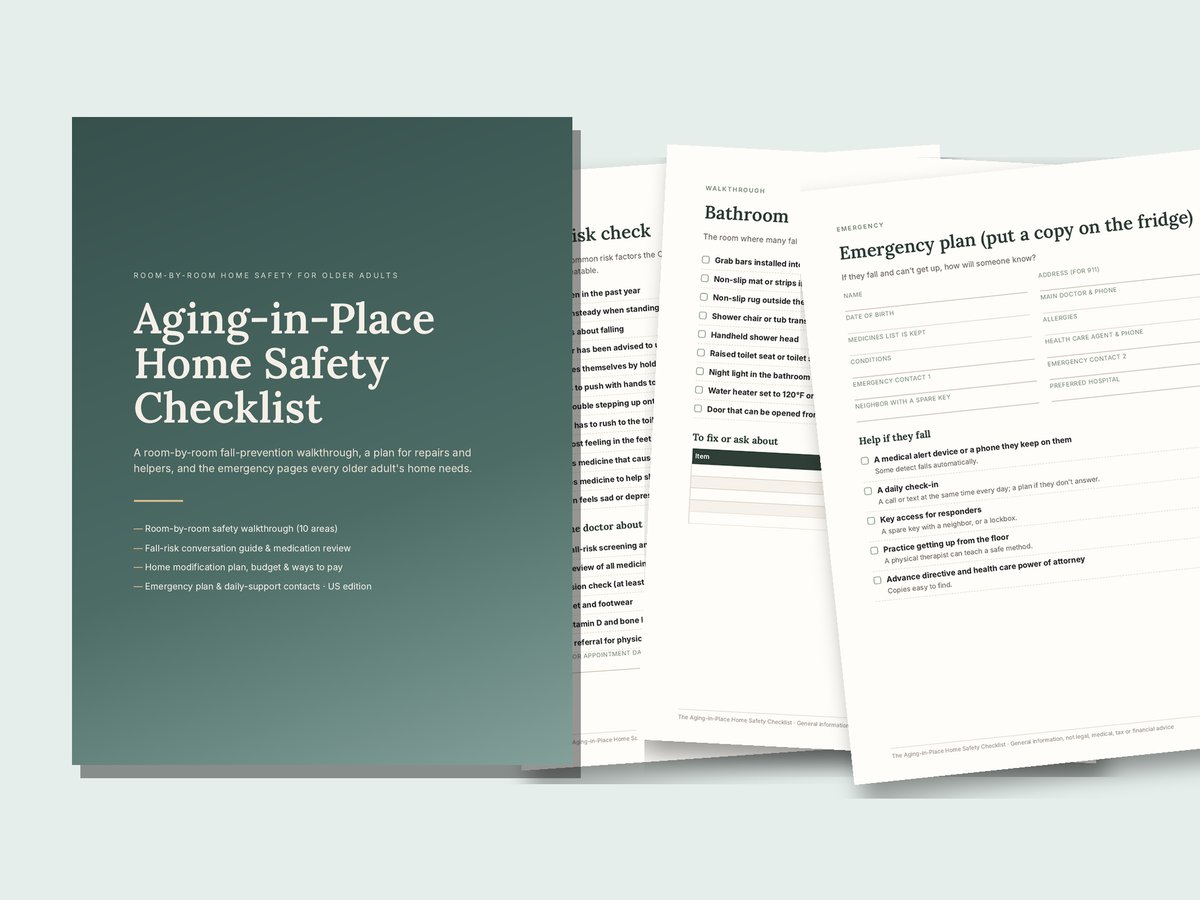
Aging-in-Place Home Safety Checklist — $12
17-page room-by-room home safety and fall-prevention workbook with a fall-risk check, modification plan, ways to pay and a fridge emergency sheet. Instant download: PDF + DOCX + XLSX.
Get the Aging-in-Place Home Safety ChecklistAll 10 kits — $59More guides
- Aging in Place Checklist: Room-by-Room Home Safety for Seniors
- Fall Prevention Checklist for Seniors: Home and Health
- Bathroom Safety for Seniors: Grab Bars, Showers and Toilets
- How To Talk to Aging Parents About Home Safety
- Does Medicare Pay for Grab Bars and Home Modifications?
- Home Modification Grants and Help for Seniors
- Medical Alert Systems: What To Look For (and Alternatives)
- Stair Safety for Seniors: A Practical Checklist
- Smoke Alarms and Fire Safety for Older Adults