What To Do With Your 401(k) After a Layoff
You usually don't have to decide right away. Take the time to compare options, because a wrong move can cost a lot in taxes.
Your main options
1. Leave it in the old plan Often allowed if the balance is above a certain amount. Simple, and the plan's protections stay. Make sure you keep the login and get statements.
2. Roll it over to an IRA More investment choices, and everything in one place. Ask for a direct rollover (trustee to trustee) to avoid withholding.
3. Roll it into a new employer's plan Once you have a new job, if that plan accepts rollovers.
4. Cash out Usually the costliest option. Withdrawals are generally taxed as income, and if you're under 59½, there's usually a 10% additional tax. The plan typically withholds 20% for federal taxes from an indirect distribution.
Exceptions worth knowing
- Rule of 55: if you leave your job in or after the year you turn 55, withdrawals from that employer's 401(k) may avoid the 10% additional tax (taxes still apply).
- Other IRS exceptions exist; see the IRS page on exceptions to tax on early distributions.
If you have a 401(k) loan
Leaving a job can make an outstanding loan due. If it's not repaid, it may be treated as a distribution. You generally have until your tax return due date (with extensions) for that year to roll over the amount and avoid tax. Ask the plan for the details.
Vesting
Check whether employer matching contributions are fully vested. Unvested amounts may be lost.
Checklist
- ☐ Download your latest statement and plan contact information
- ☐ Note any outstanding loan and its deadline
- ☐ Check your vested balance
- ☐ Compare fees and investment options before rolling over
- ☐ Update your beneficiaries
General information, not tax or financial advice. Talk to a tax professional or fee-only advisor.
The Laid-Off Action Kit includes a 401(k) and retirement accounts page and a benefits tracker.
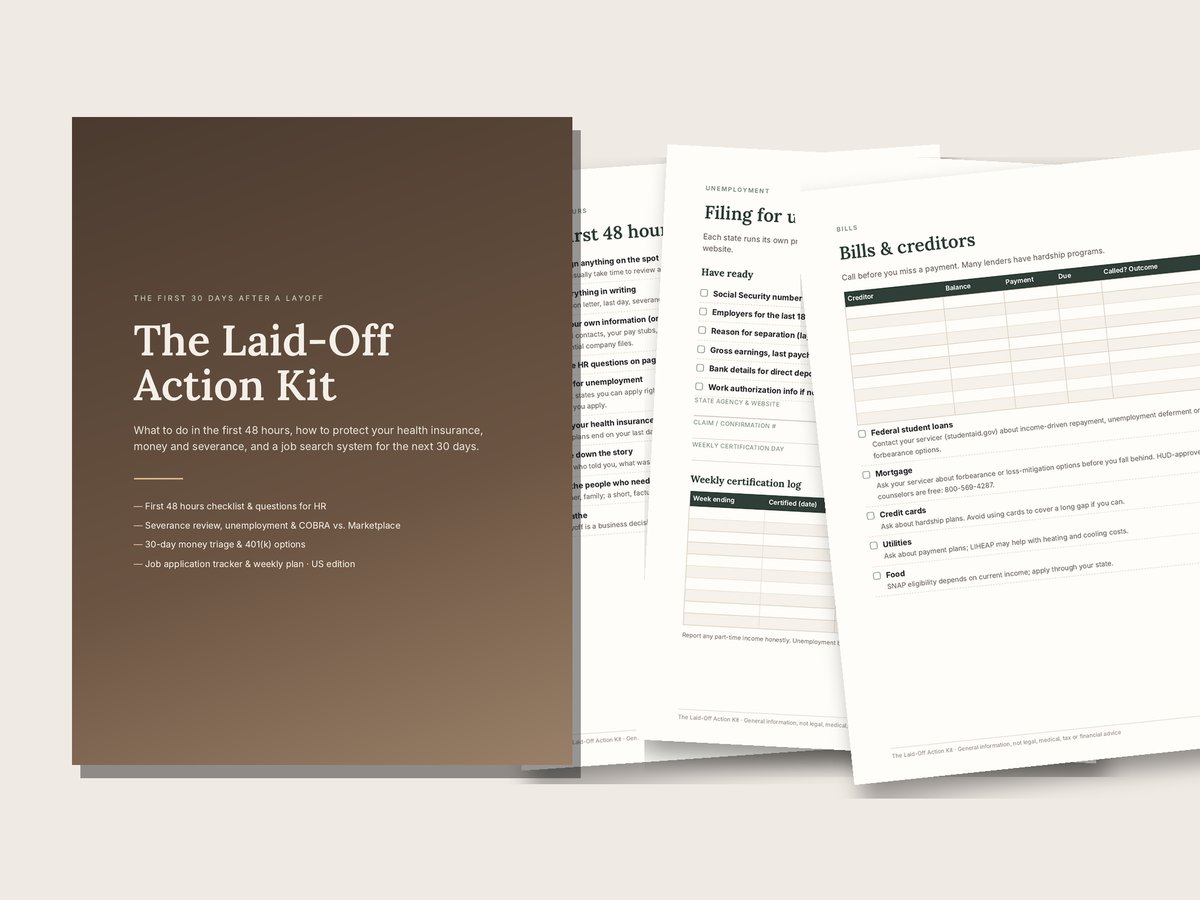
Laid-Off Action Kit — $12
18-page workbook: first 48 hours, questions for HR, severance review, unemployment, COBRA vs. Marketplace, runway budget and a job application tracker. Instant download: PDF + DOCX + XLSX.
Get the Laid-Off Action KitAll 10 kits — $59More guides
- What To Do After Being Laid Off: The First 48 Hours
- Questions To Ask HR When You Are Laid Off
- Severance Agreement Checklist: What To Review Before You Sign
- How To File for Unemployment After a Layoff
- COBRA vs. Marketplace After a Layoff: How To Choose
- Layoff Budget: How To Calculate Your Financial Runway
- Job Application Tracker: How To Organize Your Job Search
- How To Announce a Layoff on LinkedIn (With Examples)
- How To Negotiate Severance: A Polite, Practical Approach