HIPAA Authorization vs. Health Care Power of Attorney: What Caregivers Need
Caregivers often hear "we can't share that" from a doctor's office or insurer. Usually the fix is one or two documents. They do different jobs, so it helps to know which is which.
HIPAA authorization
What it does: gives permission for doctors, hospitals and insurers to share health information with the people named. What it doesn't do: let you make decisions. Notes: Under HIPAA, providers may share relevant information with family involved in care in many situations, especially if the patient doesn't object, but a signed authorization makes it much easier. Many providers have their own form; ask at the front desk.
Health care power of attorney (health care proxy)
What it does: names a person (an agent) to make medical decisions if the patient can't make or communicate them. Notes: Each state has its own rules and forms. It usually only takes effect when the person can't decide for themselves.
Advance directive / living will
What it does: writes down the person's wishes about medical treatment, such as life support, at the end of life. Notes: In many states, the health care power of attorney and living will are combined into one advance directive form. Free state forms are widely available.
POLST / MOLST
What it does: a medical order, signed by a clinician, for people with serious illness, stating which treatments they want in an emergency. Notes: Names vary by state. It's meant to travel with the patient, so keep it visible at home.
Financial power of attorney
Not medical, but caregivers often need it too: it allows someone to manage bills and finances.
What caregivers should do
- Ask your loved one, while they can decide, to sign a HIPAA authorization with each main provider and insurer.
- Help them complete an advance directive and choose a health care agent.
- Keep copies in the caregiver binder and give copies to the primary doctor and hospital.
- Write down where the originals are.
General information, not legal advice. State laws differ; an elder law attorney can help.
The Family Caregiver Binder includes a legal documents checklist with where each original is kept.
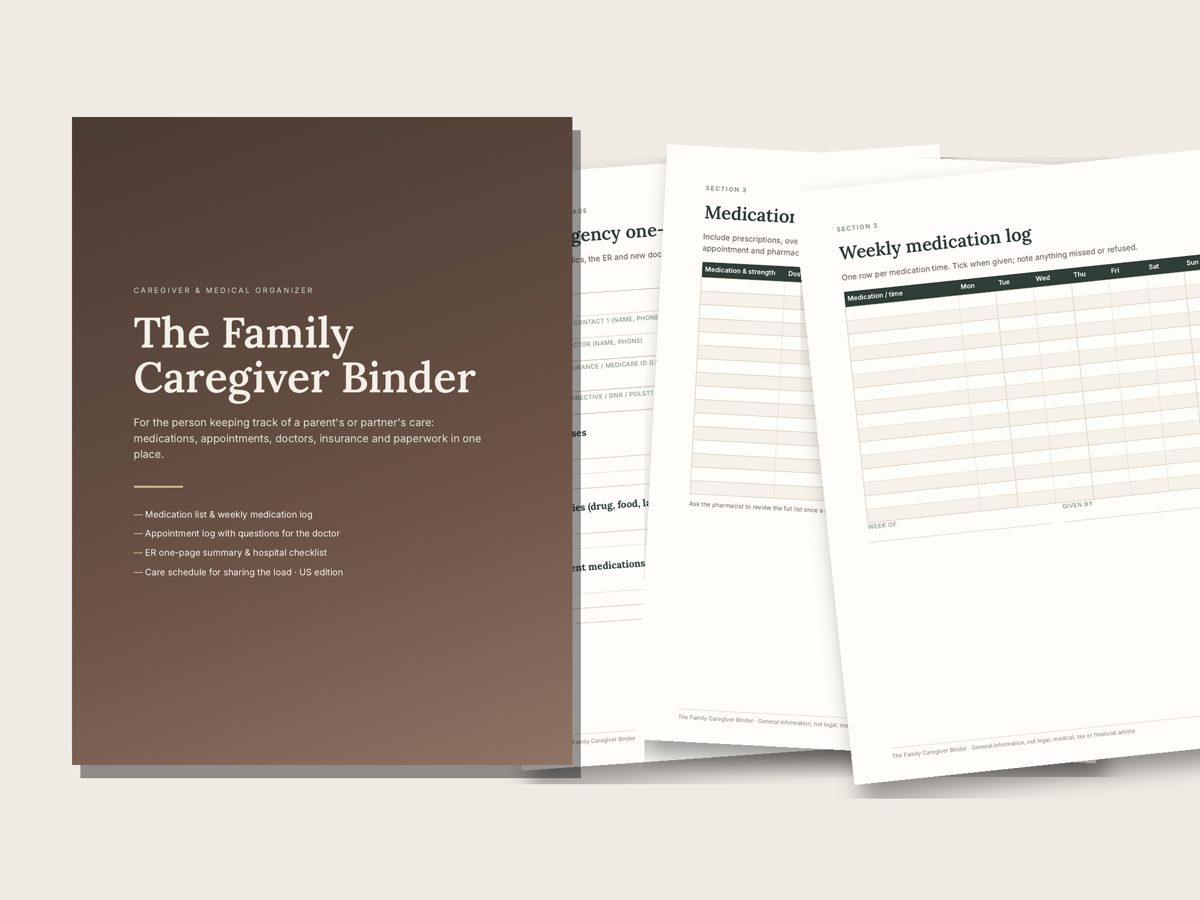
Family Caregiver Binder — $14
19-page caregiver binder: medical summary, medication list and log, appointment log, discharge checklist, legal documents and a care tracker spreadsheet. Instant download: PDF + DOCX + XLSX.
Get the Family Caregiver BinderAll 10 kits — $59More guides
- Caregiver Binder: What To Include (Printable Checklist)
- Medication List for an Elderly Parent: Free Template and Tips
- Questions To Ask the Doctor as a Caregiver
- Hospital Discharge Checklist for Caregivers
- FMLA for Caregivers: Can You Take Leave To Care for a Parent?
- Caregiver Burnout: Signs To Watch For and What Helps
- How To Share Caregiving With Siblings (Without Fighting)
- The Medicare Hospice Benefit, Explained for Families
- What To Bring to the ER for an Elderly Parent (Grab-and-Go List)