The Medicare Hospice Benefit, Explained for Families
Hospice is care focused on comfort and quality of life for people with a terminal illness. Families often wish they had started it sooner. Here's how the Medicare hospice benefit works.
Who qualifies
Under Medicare Part A, a person can generally choose hospice when:
- their hospice doctor and regular doctor (if they have one) certify they are terminally ill, meaning a life expectancy of six months or less if the illness runs its normal course,
- they accept comfort care (palliative care) instead of care to cure the illness, and
- they sign a statement choosing hospice.
People can stay on hospice longer than six months if they continue to meet the criteria, and they can stop hospice at any time.
What Medicare covers
Generally, care related to the terminal illness, including:
- doctor and nursing services
- medical equipment (such as a hospital bed or wheelchair) and supplies
- drugs for symptom control and pain relief
- hospice aide and homemaker services
- social work, dietary counseling and spiritual counseling
- short-term inpatient care for pain and symptom management
- short-term respite care so the family caregiver can rest
- grief support for the family
Hospice care is usually given at home, including in a nursing home or assisted living.
What it doesn't cover
- Treatment intended to cure the terminal illness
- Prescription drugs to cure the illness
- Room and board at home or in a nursing facility (in most cases)
- Care from a provider not arranged by the hospice team
There may be a small copayment for some drugs and for inpatient respite care.
Questions to ask a hospice provider
- How quickly can you start?
- How often will a nurse visit? Who answers the phone at night?
- What happens in a crisis?
- Which equipment and supplies do you provide?
- What respite and volunteer support do you offer?
For questions, call 1-800-MEDICARE (1-800-633-4227) or see Medicare.gov.
Source: Medicare.gov, "Hospice care" and "Medicare Hospice Benefits." General information, not medical or legal advice.
The Family Caregiver Binder includes a page for hospice and palliative care contacts and the patient's wishes.
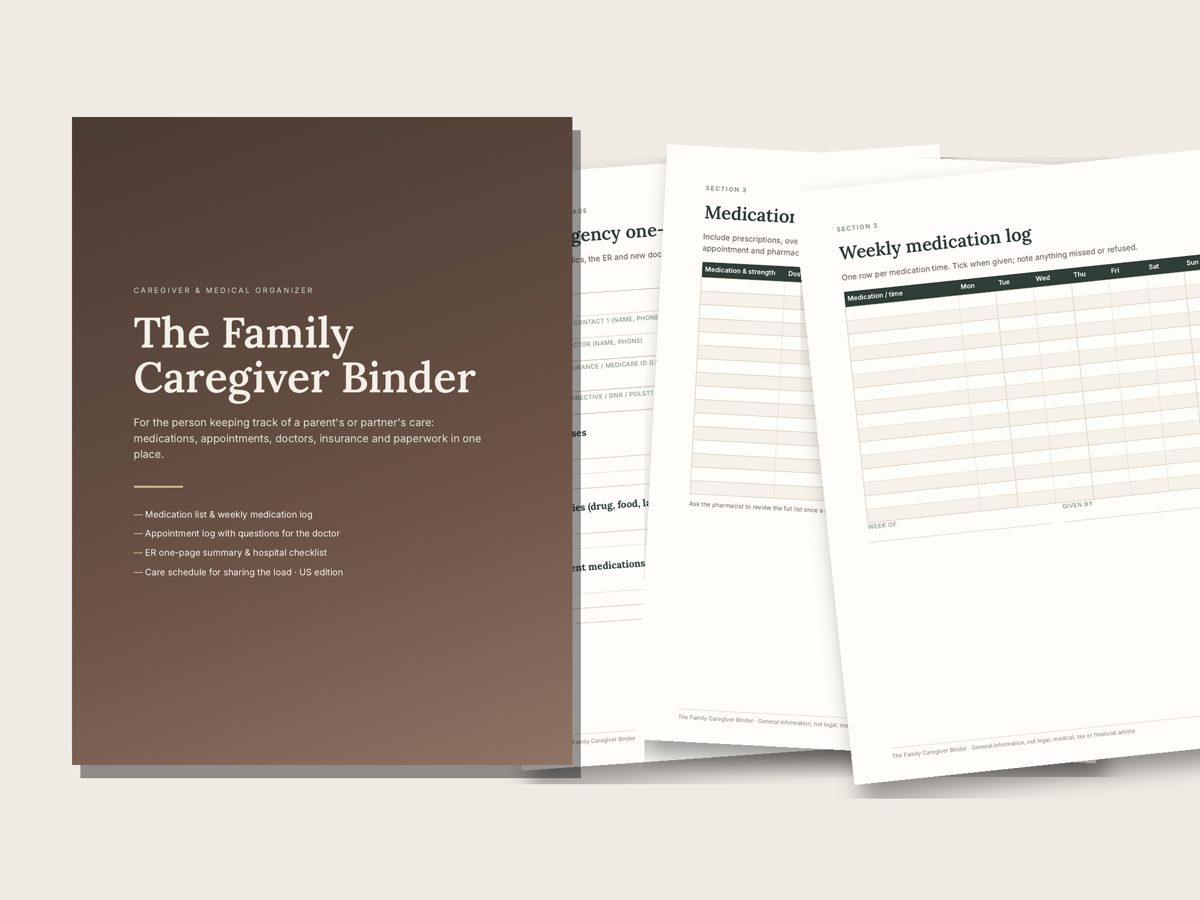
Family Caregiver Binder — $14
19-page caregiver binder: medical summary, medication list and log, appointment log, discharge checklist, legal documents and a care tracker spreadsheet. Instant download: PDF + DOCX + XLSX.
Get the Family Caregiver BinderAll 10 kits — $59More guides
- Caregiver Binder: What To Include (Printable Checklist)
- Medication List for an Elderly Parent: Free Template and Tips
- Questions To Ask the Doctor as a Caregiver
- Hospital Discharge Checklist for Caregivers
- HIPAA Authorization vs. Health Care Power of Attorney: What Caregivers Need
- FMLA for Caregivers: Can You Take Leave To Care for a Parent?
- Caregiver Burnout: Signs To Watch For and What Helps
- How To Share Caregiving With Siblings (Without Fighting)
- What To Bring to the ER for an Elderly Parent (Grab-and-Go List)