How To Choose a Moving Company (and Avoid Moving Scams)
Most moves go fine. The ones that don't usually share the same warning signs, and you can check most of them in an hour.
1. Get at least three written estimates
Ask for an in-home or video survey. A mover who gives a firm price over the phone without seeing your things is guessing, or planning to raise it later.
2. Check registration (for interstate moves)
Movers who take household goods across state lines must be registered with the Federal Motor Carrier Safety Administration (FMCSA) and have a USDOT number. Look it up on FMCSA's Protect Your Move site, and check complaints. For moves within one state, check your state's rules.
3. Know your estimate type
- Binding estimate: the price is fixed for the items and services listed.
- Non-binding estimate: the final price depends on the actual weight and services. For interstate moves, federal rules generally say the mover can't require you to pay more than 110% of a non-binding estimate at delivery; the rest is billed later.
- Binding not-to-exceed: you pay the lower of the estimate or the actual cost.
4. Understand valuation (it's not insurance)
Basic "released value" protection on interstate moves pays only a small amount per pound per item. Full value protection costs more but covers repair, replacement or cash value. Ask what's included, in writing.
5. Read the paperwork
For interstate moves you should receive the FMCSA booklet Your Rights and Responsibilities When You Move. Read the bill of lading before you sign it on moving day.
Red flags
- A large cash deposit up front
- No physical address, no USDOT number, or a different company name on the truck
- An estimate that's far lower than everyone else's
- Pressure to sign blank or incomplete forms
- "We'll tell you the price after we load"
Compare quotes side by side
Put the price, estimate type, valuation, dates and deposit for each mover in one table. The cheapest quote often isn't the cheapest move.
General information, not legal advice.
The Moving Day Binder includes a mover comparison sheet and a page on your interstate move rights.
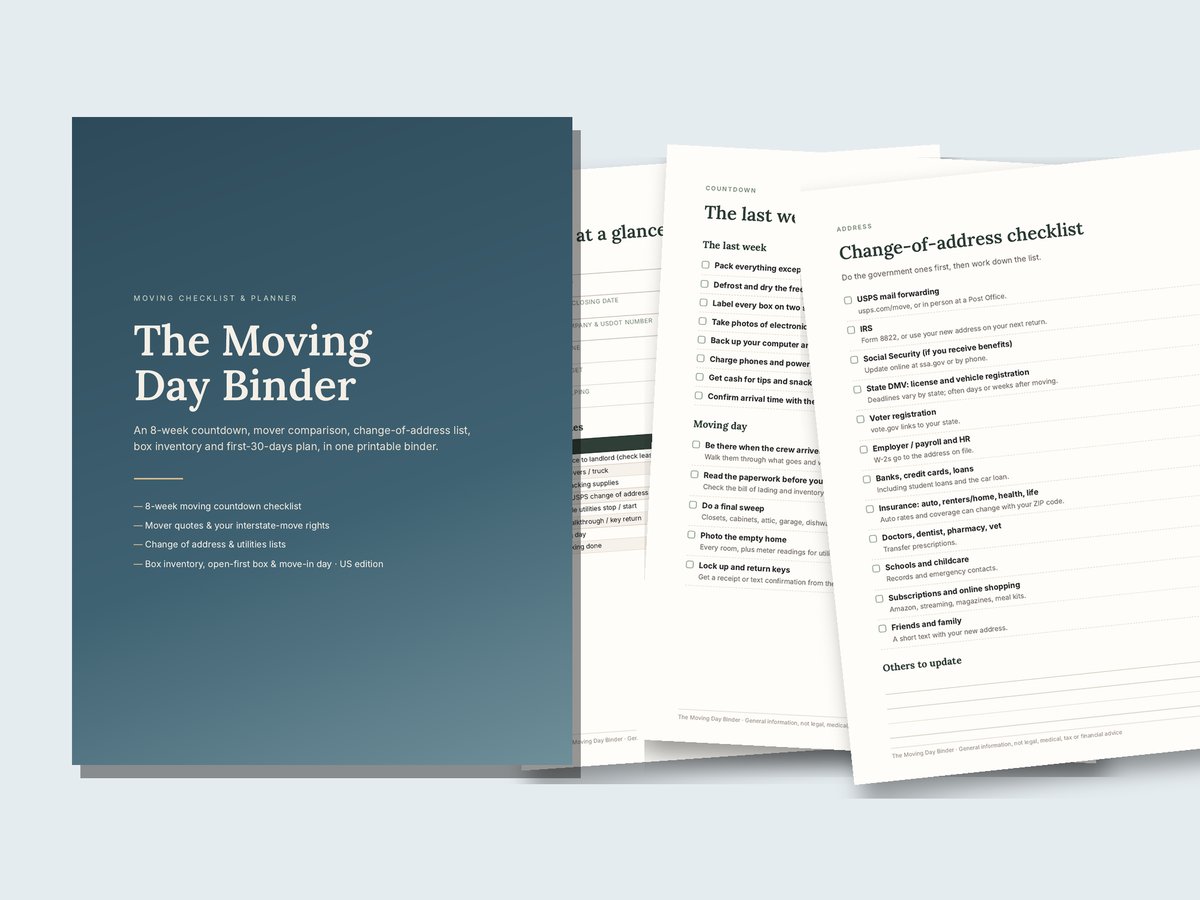
Moving Day Binder — $14
18-page moving binder: 8-week countdown, mover comparison and interstate rights, change-of-address checklist, packing plan and a 150-box inventory. Instant download: PDF + DOCX + XLSX.
Get the Moving Day BinderAll 10 kits — $59More guides
- Moving Checklist: An 8-Week Countdown That Actually Works
- Change of Address Checklist: Who To Notify When You Move
- Moving Budget Checklist: Costs People Forget
- Moving Packing List: Room by Room (Printable)
- Open-First Box Checklist: What To Pack for the First Night
- Move-Out Cleaning Checklist: Get Your Security Deposit Back
- Setting Up Utilities When You Move: Checklist and Timeline
- Moving With Kids and Pets: A Practical Checklist
- First 30 Days After Moving: The New-Home Checklist