In Case of Death Binder: What To Include (Complete Checklist)
An "in case of death" binder (also called a legacy binder, life binder or emergency binder) is a single place where you write down what your family would need to know if you died or were suddenly unable to manage your affairs. It is not a legal document. It is a map.
Why bother?
Families commonly spend months finding accounts, policies and passwords after a death. In Caring.com's 2025 survey of more than 2,500 US adults, only 24% said they had a will. Even with a will, the will doesn't say where the bank accounts are or how to get into the phone.
What to include, section by section
- Who to call first. Names and numbers, in order. Your attorney, executor, health care agent, financial advisor.
- Dependents and pets. Who picks up the children tomorrow; who takes the dog; vet details.
- Medical information and wishes. Doctors, medications, where your advance directive and health care power of attorney are.
- Legal documents locator. Where the originals of your will, trust, powers of attorney, deeds, titles and birth and marriage certificates are.
- Bank accounts and cards. Institution, type, last 4 digits only, and whether each is joint or payable-on-death.
- Investments and retirement accounts, with the beneficiary named on each (see why beneficiaries matter).
- Insurance policies. Life, employer group life, home, auto, long-term care.
- Bills and autopays. What's paid automatically, and from where.
- Home, vehicles and keys. Spare keys, alarm, water shut-off, storage unit.
- Digital life. Your password plan, phone passcode, and legacy settings (see how to leave passwords for family).
- Online accounts and subscriptions and what should happen to each.
- Work and business. Employer benefits, pensions, business partners.
- Final wishes. Burial or cremation, type of service, music, donations.
- Letters to loved ones and a letter of instruction.
What never to write in it
- Your full Social Security number
- Full account or card numbers
- Passwords or PINs in plain text
Write where things are and who can get to them, not the secrets themselves. If the binder is lost, it should not hand anyone your identity.
Where to keep it
A fire-resistant safe or a locked drawer at home works well. A bank safe deposit box can be hard for family to open quickly after a death, so keep at least a copy at home. Tell one or two trusted people where it is.
Keep it current
Review it once a year and after big life events: marriage, divorce, a birth, a death, a move, a new job or retirement.
The Just-In-Case Life Binder is a 19-page printable version of this checklist with a spreadsheet for long lists. Not legal advice; it complements, but doesn't replace, a will.
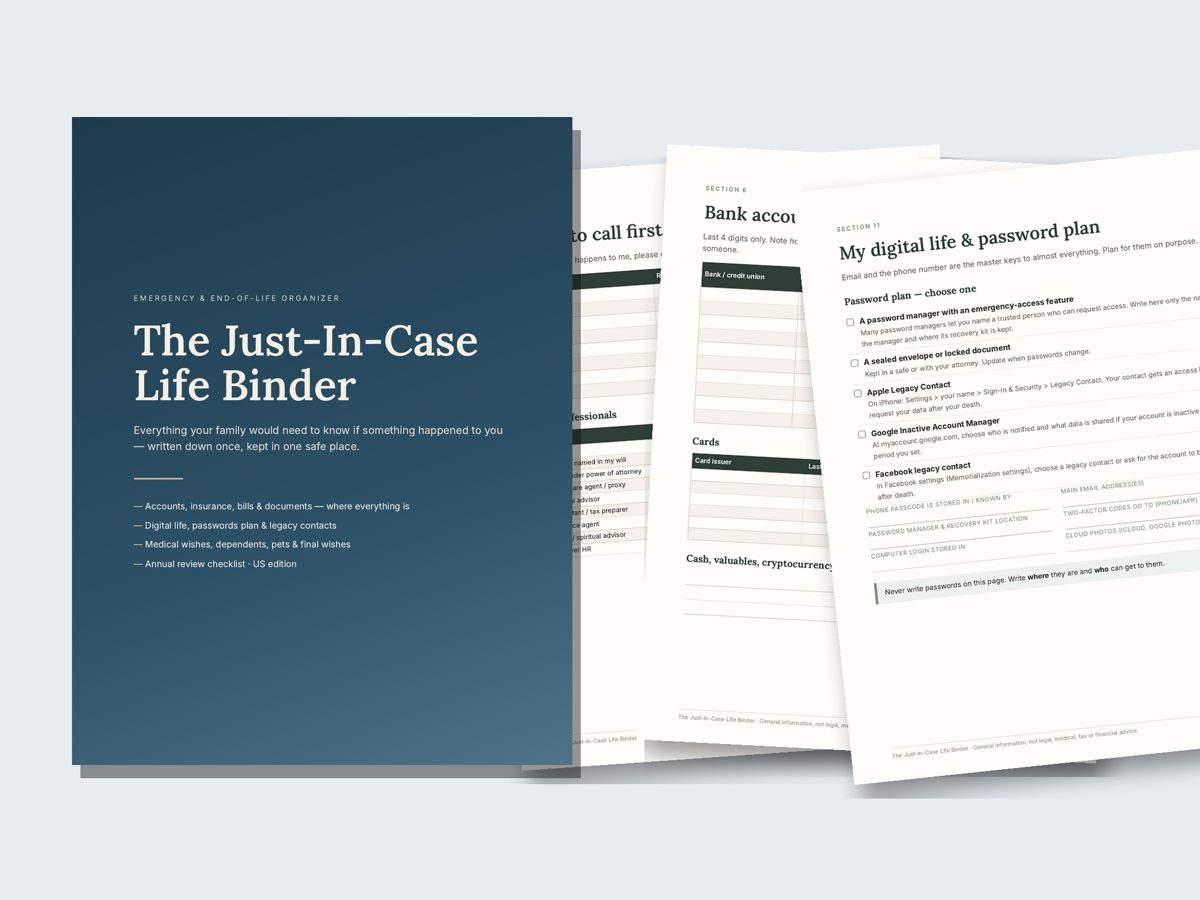
Just-In-Case Life Binder — $17
19-page printable binder for everything your family would need to know, plus letter of instruction templates and a life inventory spreadsheet. Instant download: PDF + DOCX + XLSX.
Get the Just-In-Case Life BinderAll 10 kits — $59More guides
- What Your Family Needs To Know If You Die: 10 Things To Write Down Now
- How To Leave Passwords for Your Family Safely
- Beneficiary Designations Usually Override Your Will: Check These Accounts
- Letter of Instruction: Example and Template
- Digital Legacy: Set Up Apple Legacy Contact, Google and Facebook
- End-of-Life Planning Checklist: Get Your Affairs in Order
- Important Documents To Keep and Where To Store Them
- Emergency Binder for Aging Parents: What To Ask and Write Down
- Estate Planning Checklist for Young Families (Start Here)