Schedule E Rental Expenses: Categories Small Landlords Should Track
If you rent out property, you generally report rental income and expenses on IRS Schedule E (Form 1040). Tracking expenses by the same categories during the year saves hours in April. IRS Publication 527 (Residential Rental Property) explains the rules.
Schedule E expense lines
| Category | Examples |
|---|---|
| Advertising | Listing fees, signs |
| Auto and travel | Trips to the property (keep a mileage log) |
| Cleaning and maintenance | Cleaning between tenants, lawn care |
| Commissions | Leasing fees |
| Insurance | Landlord policy, liability |
| Legal and other professional fees | Attorney, tax preparer |
| Management fees | Property manager |
| Mortgage interest paid to banks | From Form 1098 |
| Other interest | Other loans for the property |
| Repairs | Fixing a leak, replacing a broken window |
| Supplies | Light bulbs, smoke alarms, small items |
| Taxes | Property taxes |
| Utilities | Utilities you pay |
| Depreciation | Building and improvements (not land) |
| Other | Expenses that don't fit above (list them) |
Repairs vs. improvements
Repairs keep the property in working order and are usually deducted in the year paid. Improvements (a new roof, an addition) are generally depreciated over time. The line can be tricky; ask a tax professional.
Keep good records
- ☐ A separate bank account and card for the rental
- ☐ Receipts (photos are fine) labeled by category
- ☐ A rent ledger for income
- ☐ A mileage log
- ☐ Closing statements and improvement records, for depreciation and future sale
Watch out for
- Personal use of the property can limit deductions
- Passive activity loss rules may limit losses
- State rules may differ
General information, not tax advice. Talk to a tax professional.
The Small Landlord Toolkit's spreadsheet totals expenses by these Schedule E categories automatically.
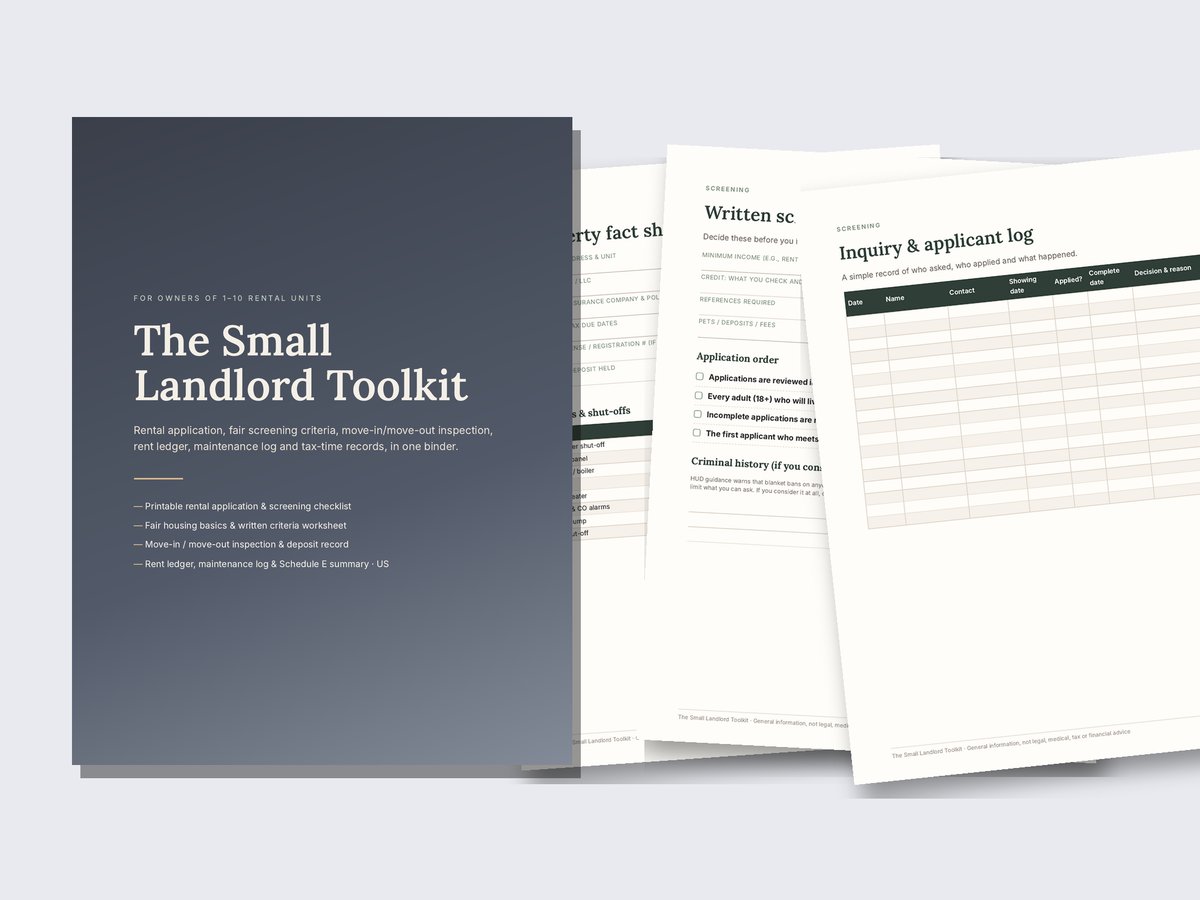
Small Landlord Toolkit — $19
18-page toolkit for 1-10 unit landlords: rental application, fair screening criteria, move-in inspection, rent ledger and Schedule E expense totals. Instant download: PDF + DOCX + XLSX.
Get the Small Landlord ToolkitAll 10 kits — $59More guides
- Landlord Checklist: Before You Rent Out Your Property
- Rental Application: What To Include (and What Not To Ask)
- Tenant Screening Criteria and Fair Housing: A Plain-English Guide
- Adverse Action Notice for Landlords: When and How To Send One
- Move-In Inspection Checklist for Landlords and Tenants
- Rent Ledger: How To Track Rent Payments (Free Template Layout)
- Security Deposit Return: A Landlord Checklist
- Rental Property Maintenance Schedule: A Year-Round Checklist
- Notice of Entry: How Landlords Should Give Notice Before Entering