Tenant Screening Criteria and Fair Housing: A Plain-English Guide
Consistent, written criteria protect you and your applicants. Decide your standards before you list, publish them, and apply them the same way to everyone.
Fair housing basics
The federal Fair Housing Act prohibits discrimination in renting based on:
- Race
- Color
- Religion
- Sex (HUD includes sexual orientation and gender identity)
- National origin
- Familial status (families with children under 18, pregnant people)
- Disability
Many states and cities add protected classes, such as source of income (including housing vouchers), age, marital status or military status. Check your local rules.
Landlords must also consider reasonable accommodation requests from people with disabilities, such as an assistance animal in a no-pet building.
Writing criteria
Common objective criteria include:
- Income: for example, gross monthly income of a set multiple of the rent (check whether your area limits this)
- Rental history: no evictions within a set time, positive references
- Credit: a minimum score or no unpaid rental debt (consider alternatives for people with thin credit)
- Occupancy: follow local occupancy standards
- Complete application and verifiable identity
Criminal history
HUD guidance warns that blanket bans on anyone with a criminal record can violate fair housing law. Consider only relevant, recent convictions, and look at each case individually. Some cities limit criminal history screening.
First come, first qualified
Many landlords process applications in the order received and offer the unit to the first applicant who meets the criteria. Write down the date and time each application arrives.
Document every decision
Keep a log: applicant, date, criteria met or not, decision, reason. If you deny someone based on a consumer report, you must send an adverse action notice.
General information, not legal advice.
The Small Landlord Toolkit includes a fair housing page, a written screening criteria template and a screening checklist.
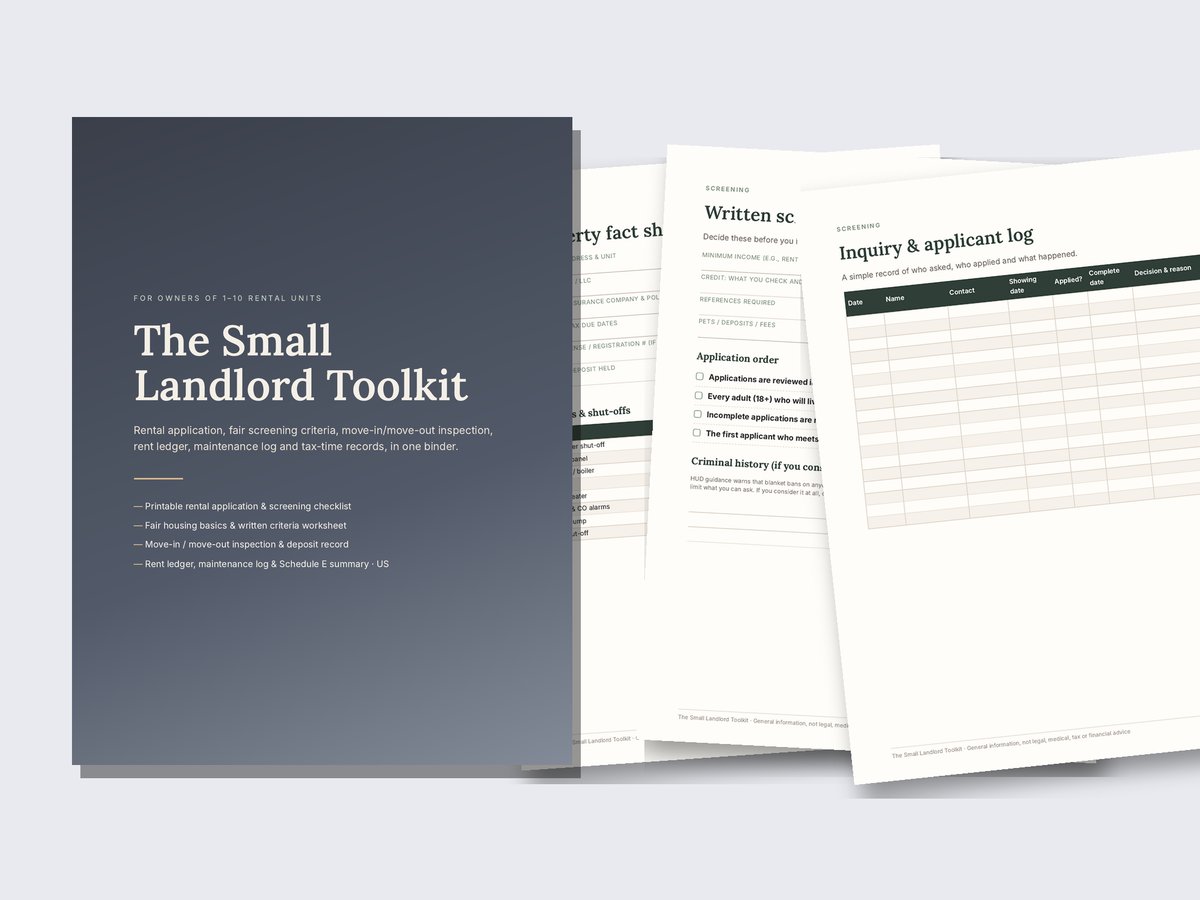
Small Landlord Toolkit — $19
18-page toolkit for 1-10 unit landlords: rental application, fair screening criteria, move-in inspection, rent ledger and Schedule E expense totals. Instant download: PDF + DOCX + XLSX.
Get the Small Landlord ToolkitAll 10 kits — $59More guides
- Landlord Checklist: Before You Rent Out Your Property
- Rental Application: What To Include (and What Not To Ask)
- Adverse Action Notice for Landlords: When and How To Send One
- Move-In Inspection Checklist for Landlords and Tenants
- Rent Ledger: How To Track Rent Payments (Free Template Layout)
- Security Deposit Return: A Landlord Checklist
- Rental Property Maintenance Schedule: A Year-Round Checklist
- Schedule E Rental Expenses: Categories Small Landlords Should Track
- Notice of Entry: How Landlords Should Give Notice Before Entering